Quick Answer: What Is On-Page SEO?
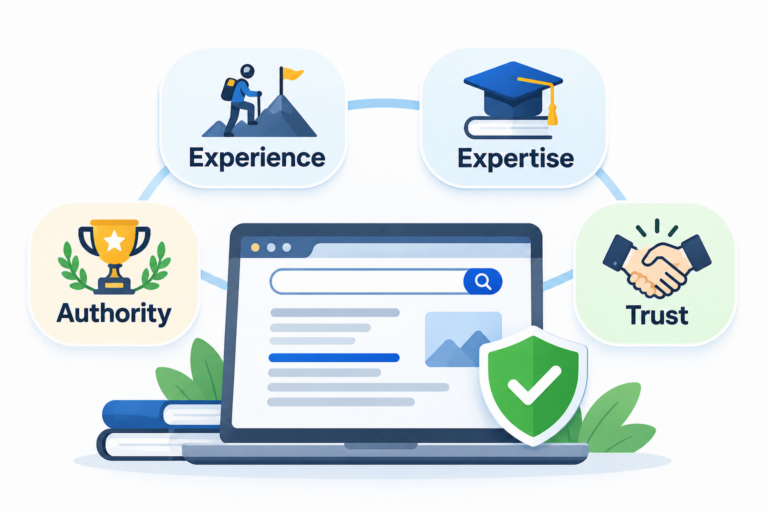
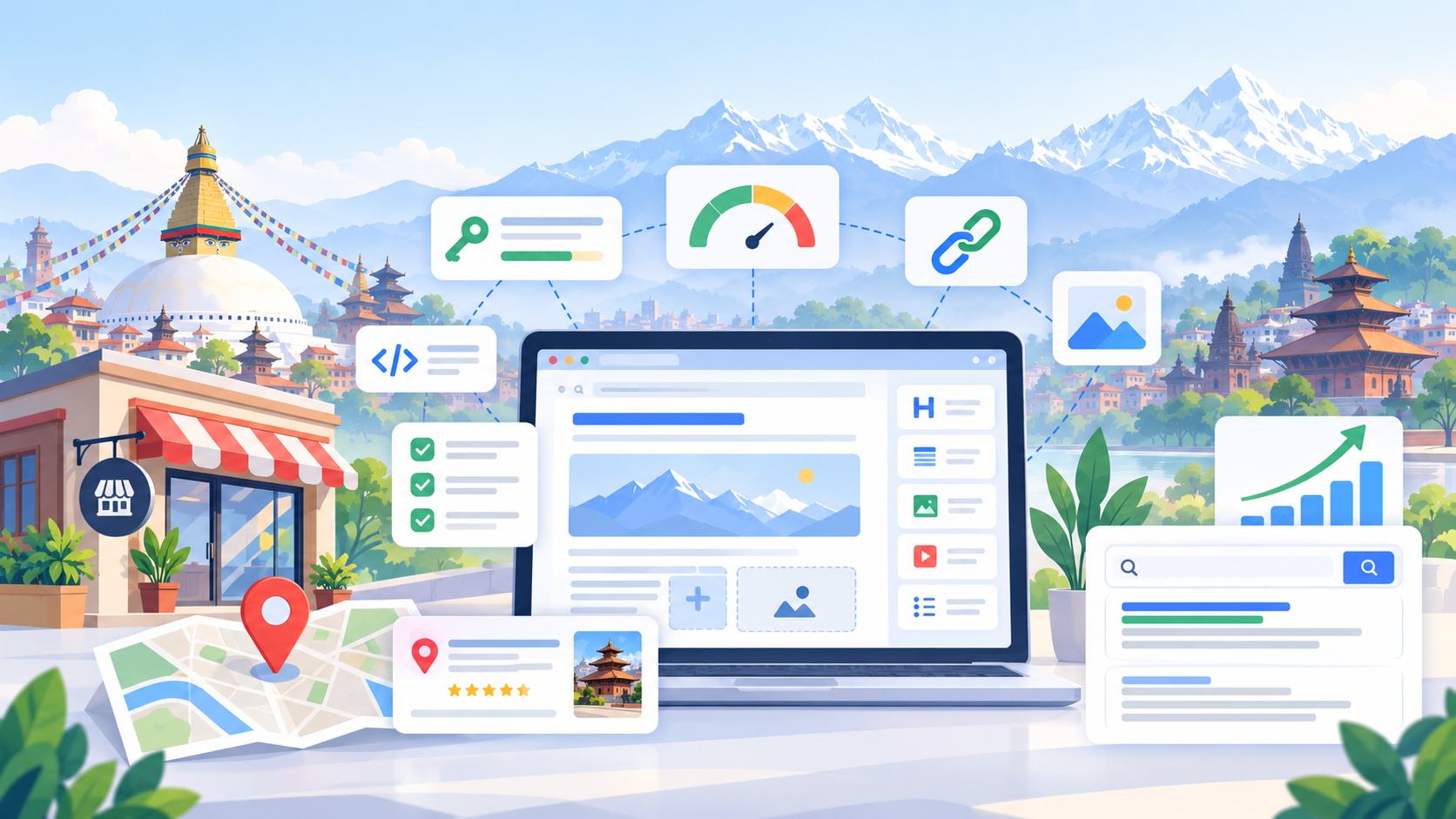
On-page SEO is the process of improving the content and elements on a website so search engines and visitors can understand each page. It includes keyword targeting, page titles, headings, useful content, URLs, images, internal links and clear next steps for visitors. For businesses in Nepal, effective on-page SEO also means explaining the services offered, the locations genuinely served and why customers should choose the business. It supports visibility in Google Search, but rankings depend on many factors and cannot be guaranteed.
What on-page SEO means for a business website
On-page SEO is the work you do on your own website to make each page useful, understandable and relevant to a search. It helps Google interpret the topic of a page and helps visitors decide whether they have found the right answer, product or service.
It is one part of a wider SEO strategy. On-page SEO covers page content and elements such as titles, headings, images and internal links. Technical SEO deals with crawlability, indexing, site performance and website architecture. Off-page SEO includes relevant links and reputation signals earned outside your website. These areas work together, but this guide focuses on the changes a business owner can make on individual pages.
Google’s SEO Starter Guide is a useful reference for understanding how search works. The practical steps below apply those principles to websites serving customers in Nepal.
Why on-page SEO matters for businesses in Nepal
A potential customer may search for a service before they know which company to contact. A clear, relevant page gives that person a way to discover your business, understand what you offer and take the next step.
For example, a person searching for “laptop repair in Kathmandu” needs more than a page that only says “Welcome to our website.” A useful service page should explain the repairs offered, the areas served, how to request help, and what makes the business a suitable choice. A wedding photographer in Pokhara needs different information, such as portfolio examples, packages, booking details and service locations.
On-page SEO does not replace referrals, social media or paid advertising. It helps your website become a useful destination for people actively looking for the products or services you provide.
Start with search intent and keyword research
Before editing a page, decide what a searcher is trying to achieve. Someone searching “what is on-page SEO” wants an explanation. Someone searching “on-page SEO service in Nepal” may be comparing providers. The page should match that intent rather than trying to target every related phrase.
Start by listing your main services, products, customer questions and the locations you genuinely serve. Then research how people describe them. Examples might include “accounting software for small businesses in Nepal”, “wedding photographer in Pokhara” or “AC repair in Lalitpur”. Treat these as research examples, not proof of search volume.
- Review Google Search Console to see queries that already generate impressions and clicks for your website. Data is delayed and should be assessed over a suitable date range.
- Use Google autocomplete and related search suggestions to discover wording and questions worth investigating.
- Speak with sales and support teams about the questions customers ask before buying.
- Compare the pages currently ranking for a query to understand the expected format and level of detail.
- Assign one primary topic and a clear search intent to each page. Use closely related phrases naturally where they help the reader.
Avoid creating several pages that all target the same intent. If two pages answer the same question, decide whether they should be combined or given clearly different purposes.
Write useful page titles and meta descriptions
The SEO title helps describe a page in search results and browser tabs. Write a unique, specific title that accurately reflects the page. Include the main topic naturally and, when useful, the location or brand. There is no fixed character limit that guarantees a title will display in full; Google may truncate or generate a different title link based on the page and query.
Weak title: Home
More descriptive example: Laptop Repair in Kathmandu | [Business Name]
A meta description should summarise the page and give a searcher a reason to visit. Make it specific, useful and distinct from descriptions on other pages. Google may use the description or select page text to create the search snippet, so do not treat a particular character count as a ranking rule.
For this article, the title and description should clearly communicate that it is a practical beginner’s guide to on-page SEO for Nepali business owners.
Read Google’s guidance on title links and search snippets.
Organise headings and write people-first content
Use a clear main heading that describes the page, followed by descriptive subheadings that help readers scan the information. A logical heading hierarchy improves accessibility and makes long pages easier to navigate. Do not add keywords to headings when they make the wording awkward.
Answer the main question early, then explain the details. Use plain language, short paragraphs, examples and specific information that reflects your business knowledge. Avoid generic introductions, repeated claims and paragraphs written only to include a keyword.
For a service page, explain what is included, who the service is for, how the process works, what information a customer needs to provide and how to get in touch. For an informational article, answer the question fully and link to a relevant service only where it genuinely helps.
Google’s guidance on helpful, reliable, people-first content is a useful standard. If you need support planning or producing website content, see Flowrage’s content marketing service.
Improve URLs, images and internal links
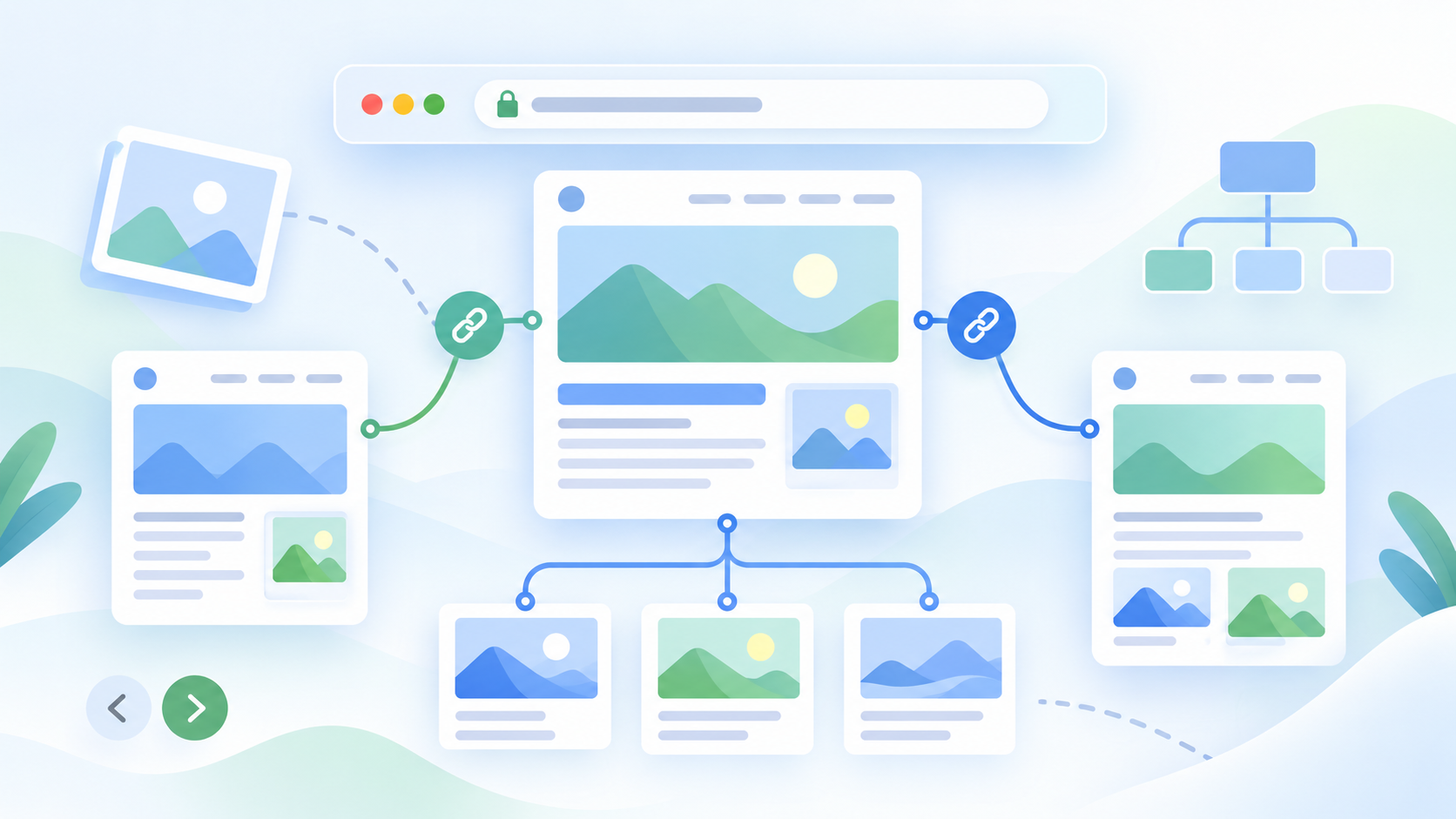
Use URLs that are readable and describe the page topic. Keep them concise where practical, use hyphens between words and avoid changing established URLs without a clear reason and a proper redirect plan.
Images should support the page rather than simply fill space. Use descriptive filenames where practical, compress images appropriately and choose dimensions that suit the layout. Write alt text that explains the image’s purpose for people who cannot see it. Decorative images can use empty alt text; do not stuff keywords into every image description.
Internal links connect related pages on your website. Use descriptive anchor text that tells readers what they will find. For example, this guide can link to Flowrage’s on-page SEO service in Nepal when a reader wants professional implementation. Related guides can also link to this article when the context is relevant.
Check links periodically so important pages are not left orphaned and visitors do not encounter broken destinations.
Make local information genuinely useful
If your business serves customers in a specific place, explain that clearly on the relevant pages. Include accurate contact details, service areas, opening hours where relevant, and practical information about how customers can access the service. Keep business details consistent with your Google Business Profile.
Do not create a separate page for every town simply by swapping the place name. Create a location page only when you can provide useful, accurate information for that area, such as a real branch, a distinct service arrangement, local project examples or relevant customer information.
On-page work supports local SEO, but it is not the whole process. For a broader explanation of Google Maps visibility, profile optimization and local relevance, read Flowrage’s local SEO guide for Nepal and explore our local SEO service.
Check mobile usability, page experience and technical basics
Check important pages on a phone as well as a desktop. Text should be readable, navigation should be usable, buttons should be easy to tap and the main information should not be hidden behind intrusive elements. A page should also load reliably on the connections and devices your customers use.
Use PageSpeed Insights to review performance and Core Web Vitals. Image compression, efficient hosting, sensible caching and reducing unnecessary scripts can help. These are largely technical and performance tasks rather than content edits, so include them in your wider technical SEO checks.
Structured data can help search engines interpret eligible content, but it must accurately represent visible page information and follow Google’s policies. Use the appropriate schema type for the page; do not mark an informational blog post as a service simply because the topic discusses a service. Validate structured data and avoid duplicate or conflicting markup.
Practical on-page SEO example for a Nepali business
Imagine a Kathmandu-based appliance repair company. Its service page currently has the title “Our Services” and a short paragraph saying that it repairs appliances. That page gives searchers very little information.
A more useful page could target the specific service and audience with a title such as “Washing Machine Repair in Kathmandu | [Business Name]”. Its main heading could be “Washing Machine Repair in Kathmandu”. The page could then explain the types of faults handled, the areas actually covered, how customers book a visit, what happens during an inspection, and how to contact the company.
Example page elements:
| Element | Example | Why it helps |
|---|---|---|
| SEO title | Washing Machine Repair in Kathmandu | [Business Name] | Names the service and the real service area. |
| H1 | Washing Machine Repair in Kathmandu | Confirms the page’s main purpose. |
| Meta description | Need washing machine repair in Kathmandu? See the faults we handle, service areas and how to request an inspection from [Business Name]. | Summarises useful details and sets a clear expectation. |
| Opening paragraph | State which machines and faults the business handles, where it operates, and the next step for booking. | Answers the visitor’s first questions without making unsupported promises. |
| Supporting content | Explain common faults, inspection steps, service limits, FAQs and contact options. | Provides decision-making information instead of repeating keywords. |
These are illustrative templates, not claims about an actual repair company. Replace the placeholders with verified business details and only list services the business really provides.
The business should add genuine photos where useful, descriptive image text, links to related appliance services and a clear enquiry action. It should not claim same-day service, warranties, certifications or fixed prices unless those details are true and current. This is the difference between adding keywords and making a page genuinely useful.
On-page SEO checklist before publishing
- Choose a clear page purpose, audience and search intent.
- Research one primary topic and relevant supporting questions.
- Write a unique title and a useful meta description.
- Use a descriptive main heading and logical subheadings.
- Answer the visitor’s main question early and provide original, accurate detail.
- Use readable URLs and avoid unnecessary URL changes.
- Optimise images, file sizes and meaningful alt text.
- Add contextual internal links to relevant pages.
- Check mobile usability, page performance and working forms or calls to action.
- Review canonical, indexability and relevant structured data.
- Publish, inspect the URL in Search Console and monitor results over time.
Start with your homepage and the service or product pages that matter most to the business. Improve them in priority order rather than trying to update every URL at once.
Common on-page SEO mistakes to avoid
- Using the same title and description across many pages.
- Targeting several unrelated topics on one page.
- Repeating exact-match keywords unnaturally in headings and paragraphs.
- Publishing thin or near-duplicate location pages.
- Using generic image alt text or adding keywords that do not describe the image.
- Adding internal links that do not help the reader.
- Making claims about services, experience, prices or results that cannot be verified.
- Assuming a plugin score or a single ranking position proves that SEO is successful.
- Changing URLs without redirects and updating internal links.
How to measure whether on-page SEO is working
Use Google Search Console to review impressions, clicks, click-through rate and average position for the page and its relevant queries. Compare equivalent date ranges and allow for normal changes in demand and search results. Use the page filter to isolate this URL rather than relying on property-wide totals.
Use analytics or reliable conversion tracking to understand what visitors do after arriving. Depending on the business, useful outcomes may include enquiry form submissions, phone calls, bookings, purchases or qualified leads. More impressions are not automatically better if the page attracts the wrong audience.
Keep a record of the changes you make and the date they go live. Review performance after search engines have had time to recrawl the page, then refine the content based on real queries and customer behaviour. SEO outcomes vary by competition, website history, content quality and other factors; no specific ranking or traffic increase can be promised.
Should you do on-page SEO yourself or hire an agency?
Business owners can handle many basic improvements themselves, especially when the website is small and the changes are straightforward. An experienced freelancer or agency may be useful when the site has many pages, technical issues, competing keywords, complex services or limited in-house time.
Before hiring a provider, ask what pages will be reviewed, how keyword targets are selected, what changes are included, how progress is reported and how success will be measured. Ask for relevant examples and clear explanations rather than guaranteed rankings.
You can review Flowrage’s case studies, explore our SEO packages, or learn about our wider SEO and growth services. For a broader view of choosing a provider, read our guide to an SEO company in Nepal.
Frequently asked questions about on-page SEO
What is on-page SEO in simple terms?
It is improving the content and elements on your own website so visitors and search engines can understand each page. Common tasks include improving titles, headings, page content, images, URLs and internal links.
Is on-page SEO different from technical SEO?
Yes. On-page SEO focuses mainly on page content and elements. Technical SEO focuses on areas such as crawling, indexing, site architecture, performance and structured implementation. Some improvements overlap, and both support a healthy website.
How many keywords should I target on one page?
Give each page one clear primary topic and cover closely related terms and questions naturally. The right scope depends on search intent. Do not force a fixed number of keywords into a page.
How long does on-page SEO take to show results?
There is no fixed timeline. Search engines need to recrawl and reassess changed pages, and results depend on competition, site quality, demand and the changes made. Monitor impressions, clicks and conversions over time rather than expecting an immediate ranking change.
Does every page need a meta description?
Important pages should have useful, unique descriptions where practical. Google may still generate a different search snippet depending on the query and page content.
Do small businesses in Nepal need local keywords?
Use location terms when they accurately describe where the business operates or serves customers. A location should be included because it helps the visitor, not simply to insert more place names.
Can AI write my website’s SEO content?
AI can help with research, outlines and drafting, but a knowledgeable person should verify facts, add first-hand business information and edit the final page. Do not publish generic or inaccurate text simply to increase word count.
Get help improving your website
Good on-page SEO starts with understanding what customers need and making each important page genuinely useful. If you want help reviewing page structure, content, internal links and optimization priorities, explore Flowrage’s on-page SEO service in Nepal. You can also contact the Flowrage team to discuss your website and goals.