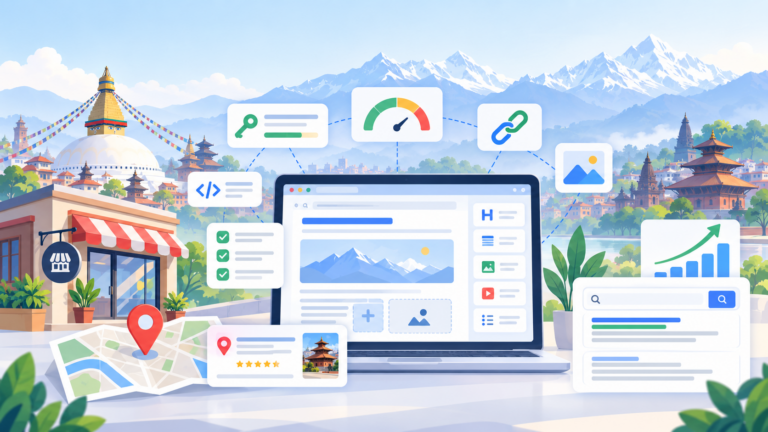
SEO growth is what you see when more of the right people find your website through Google and other search engines, and keep finding it month after month. You don’t pay per visit. You pay up front in time, and the visits keep coming after the work is done.
It’s also slow. A new page can sit for weeks before Google shows it to anyone. This post covers how search works, what we fix first on most sites, which tools are worth your time, and where AI answers fit in. We’ve left out the hype.
What SEO growth looks like in real numbers
SEO stands for search engine optimization. It’s the work of helping search engines understand your pages. SEO growth is the result of that work.
Say a clinic in Lalitpur gets 200 visits a month from Google. A few months of fixes and new pages later, it gets 600, and more of those people book an appointment. Both changes count. The first is SEO traffic. The second is the conversion rate, the share of visitors who actually call, buy, or sign up. Traffic that never does anything is nice to look at and worth very little.
How SEO growth can grow your business
A person who types “laptop repair in Kathmandu” into Google already wants a laptop fixed. If your page is in the search results at that moment, you don’t have to interrupt anybody.
Ads work differently. You pay for every click, and the visitors stop when the budget stops. A page that ranks keeps working. Many businesses run paid and organic search together, with ads covering the gap while SEO catches up. Over a year or two, SEO usually gives the better return on investment, though nobody can promise exact figures. This holds for an online store as much as for a clinic. Ecommerce shops often win with good product pages that answer real questions.
How Google search finds pages and builds search results
Google’s process has three steps. Crawlers follow links from page to page. Google reads what they find and stores it in an index, which is a giant list of known pages. When someone searches, Google picks from that list.
A page that isn’t indexed can’t show up at all, so we check this before anything else. It’s the first step of any SEO growth plan. The page indexing report in Google Search Console tells you which pages made it in. Once a page is indexed, it’s eligible to appear in search results. Eligible doesn’t mean it will appear, and that gap is where most of the work lives.
What moves your ranking
Ranking is the order of the results. Google uses many signals and doesn’t publish the full list. It does say pages should match the query, be helpful, and give users a good experience.
Links from other sites still count. The old PageRank idea was built on them, and a backlink from a site people trust still helps. But no one outside Google can sort the signals into a neat formula, and anyone who claims to is probably selling something. What works in practice is dull. Take one page, and make it a better answer than what’s on page one now. That’s how you rank well, one page at a time, and it’s how SEO growth builds up.
Build a marketing strategy before you touch titles
Decide what you want first. Calls, online orders, or sign-ups? The answer shapes every page you write.
SEO sits inside a wider digital marketing strategy. Social media, email, and influencer posts send people to your site. Search sends people who were already looking. A clinic and a clothing store need different pages and a different mix, so a tailored SEO plan beats copying a big competitor. Write down your SEO growth goal, 10 to 20 queries your customers use, and the page each one belongs to. Then split the work across months.
If you’d rather have a team build the plan, look at our SEO and growth services.
Technical SEO problems to fix first
Technical SEO is the setup under your pages. If Google can’t crawl the site, nothing else you do matters. Google’s SEO starter guide covers the basics.
A sitemap is a file that lists the pages you want Google to know about. It matters most on new sites. Google explains it on its sitemaps page. A robots.txt file tells crawlers which parts of the site to skip, and it’s easy to block your whole site with one wrong line. Check Google’s robots.txt guide before you edit it. Online stores should also look at duplicate URLs, because one product can live at many addresses and Google has to pick one. That choice is called canonicalization.
The SEO issues we find most often:
- pages that Google crawls but doesn’t index
- slow loading on phones (test yours on PageSpeed Insights)
- broken links and error pages
- missing page titles and descriptions
- messy URLs full of numbers and symbols
Our technical SEO service covers all of these.
On-page work that pays off

On-page SEO is everything you change inside your own pages. We wrote a longer guide on on-page SEO in Nepal, and the on-page SEO service covers it for clients.
Optimize titles, headings, and links first
Start with the title, the blue line people click in Google. Keep it near 60 characters and put your main keyword close to the start. The meta description under it won’t change your rank directly, but a clear one gets more clicks.
Use one H1 per page, then H2 and H3 headings to break up the text. Add alt text to images. Then add internal links from one page of your site to another. They help visitors move around and show Google which pages matter. Write the link text as what the page is about. “See our laptop repair page” beats “click here.”
Writing SEO content people finish reading
SEO content is a page written to answer a real search. We care about the reader first and the keyword second. Google asks for helpful, people-first content, and that matches what we see.
Our routine for a new piece of content is simple. Pick one query, like “how to choose a laptop for college.” Read the top results and note what they leave out. Answer the question in the first few lines. Add details only you have, like prices, photos, and examples from your own work. Come back and update it when facts change.
AI-generated drafts are fine as a starting point. Google looks at quality, not at who typed the words. But a page of generic text with no real detail won’t go far, so a person should read and fix every one. Our content marketing page shows how we plan this.
SEO tools worth paying attention to
You can do a lot of SEO growth work with free tools. Search Console shows your search queries and index problems. PageSpeed Insights tests speed. Google Analytics shows what visitors do after they land.
Paid SEO tools like Semrush and Ahrefs add keyword data, competitor checks, and backlink reports. Screaming Frog crawls your site and finds broken links. They save time. We’d still start with the free ones for the first three months. Buying software before you know what to look for is a common way to waste money. If you run a shop with a map listing, our post on Google local SEO software covers the local side.
How to check your SEO growth each month
Pick one day a month. Open Search Console and note your clicks, impressions, and the search queries that bring people in. Open your analytics and note how many visitors took the action you care about. Put the numbers in a sheet and compare them with last month, and later with the same month last year.
After three months, you’ll see which pages are rising and which are stuck. Do more of what works. A noticeable impact often takes a few months, and longer for a new site. Anyone who promises page one in a week isn’t being straight with you.
What generative engines do to search results
Search is changing. Google now shows AI Overviews at the top of some results. It also has AI Mode, where people ask longer questions and get a written answer with links. Tools like ChatGPT answer questions too, and sometimes name brands. People call the work of showing up in these answers generative engine optimization, or GEO.
Google says the same basics apply to its AI features. Your page has to be indexed, allowed to show in Google Search, and useful. You can read that on its page about AI features and your website. No one outside these companies knows exactly how sources get picked. So we don’t chase tricks. We keep pages clear, keep facts correct, and keep business details the same everywhere online. Those habits help in normal search and in AI mentions, and they support SEO growth over time.
Where the SEO industry is heading
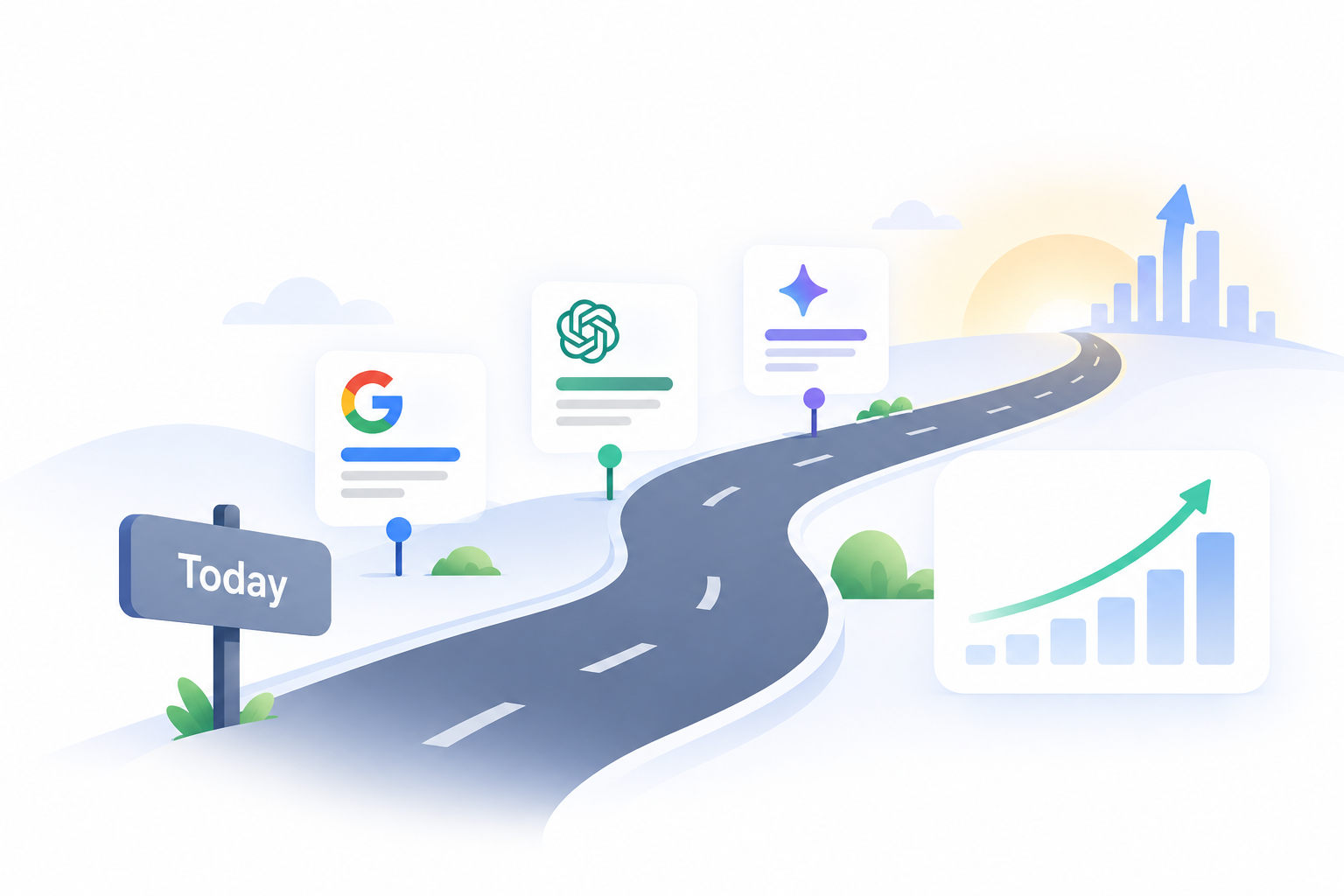
The SEO industry never sits still. Google updates its ranking systems a few times a year, and results shift when it does. The Google Search Central blog and the core updates page announce them. A drop in clicks after an update is worth checking, but it’s rarely a reason to rebuild your site. Sites that do the basics well tend to recover.
Mistakes that slow SEO growth
Most of what we find is ordinary. People write for search engines instead of readers. They use the same title on twenty pages. They block pages by accident in robots.txt, or buy cheap backlinks. They never update old pages, and they judge results after two weeks. Each of these is easy to fix once someone spots it. An audit usually finds them in an hour.
Get help with SEO growth
Flowrage is a digital marketing team in Kathmandu. We work with small shops, online sellers, and bigger firms. You can browse our case studies, look at our SEO package page, or read about SEO services in Nepal.
If you want a second opinion on your SEO growth, send us the address through the contact page. We’ll reply within one business day.