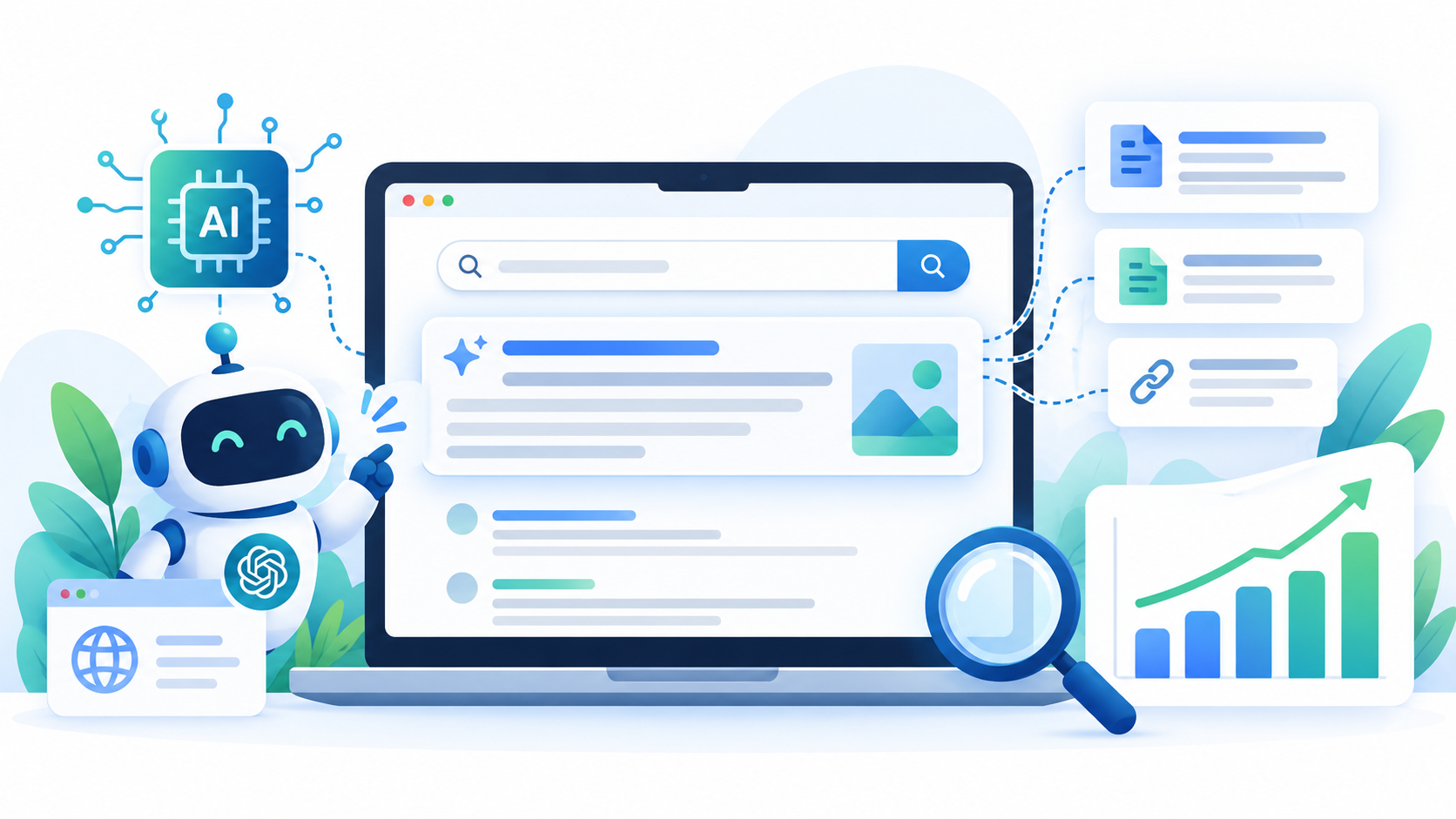
People no longer only type words into a box and click blue links. They also ask AI tools for answers. Google shows AI Overviews at the top of some search results. Chat tools give short answers with sources.
This changes how websites get found. That is why AI SEO optimization matters now. In 2026, SEO is no longer optional, and it is no longer only about ten blue links.
This guide explains AI SEO optimization in simple words. You will learn how AI search works, how to optimize for AI, and how to get cited by AI. You will also see tools, common mistakes, and a simple plan.
Quick answer: AI SEO optimization means making your content easy for AI systems and search engines to find, understand, trust, and cite. It builds on good traditional SEO and adds clear structure, direct answers, and strong brand signals.
What Is AI SEO Optimization?
AI SEO optimization is the work of helping your website show up inside AI-generated answers, and not only in normal search results. It is also called generative engine optimization (GEO), AI search optimization, or AI optimization.
Search engine optimization is the older and wider craft. It helps search engines crawl, understand, and rank your pages. AI SEO optimization adds a new goal: to be used and cited by AI models when they build an answer.
| Term | Simple meaning |
|---|---|
| SEO | Getting found in search engines |
| AI SEO | Getting found and used in AI answers |
| GEO | Another name for optimizing for generative AI |
| AI citation | When an AI answer names or links your page as a source |
AI and SEO: How AI in Search Changes Search Today
Search today has more than one door. A person can use Google, an AI chat tool, an AI assistant on a phone, or an AI agent that does tasks for them. Each one reads the web in a slightly different way.
Three big changes are happening in the search landscape:
- AI-powered search engines give answers, not only links. Many people read the answer and stop.
- Questions are longer. People talk to AI like they talk to a friend.
- Sources matter more. AI tends to pull from pages that are clear, trusted, and easy to read.
This is why SEO and AI now work together. A page that AI cannot read or trust is not likely to be cited by AI.
Traditional SEO vs AI SEO Optimization
Traditional SEO is still the base. Google says that the same SEO basics help your pages show up in its AI features in Search. A page must be indexed and able to show a snippet. So do not throw away what already works.
What Stays the Same
- Fast pages and good mobile use.
- Clean technical SEO.
- Helpful, honest content.
- Strong links and brand mentions.
These are traditional SEO best practices, and they still drive most search visibility.
What Is New in AI-Driven Search
- Short, direct answers that AI can lift out.
- Clear structure, so AI can find the right part of a page.
- Proof of real experience and clear authors.
- Brand mentions across the web, not only links.
- New ways to track AI visibility.
In short, AI SEO optimization is not a replacement. It is traditional SEO plus extra care for how AI reads and uses your content.
How Generative AI Changes Search Behavior and Search Experience
Generative AI writes new answers from many sources. This changes search behavior in simple ways. People ask full questions. They compare options inside one answer. They click less when the answer feels complete.
The search experience is now more like a chat. A user can ask a follow-up and get a new answer at once. For businesses, this means your page must answer the first question and the next one too.
If you want to follow these shifts, watch Search Console and your own site data. They can help you predict emerging search trends before your rivals do.
How AI Overviews and AI Search Pick Sources
No one outside the search companies knows the full recipe. But we know the pattern. Google AI Overviews and other AI search engines tend to use pages that are:
- Easy to crawl and index.
- Clear and direct in their answers.
- Written by people who show real knowledge.
- Supported by facts, names, and dates.
- Mentioned by other trusted sites.
When your brand appears in AI answers, it often means the AI sees your site as a safe source. This is the goal of AI SEO optimization.
9 Ways to Optimize for AI Search
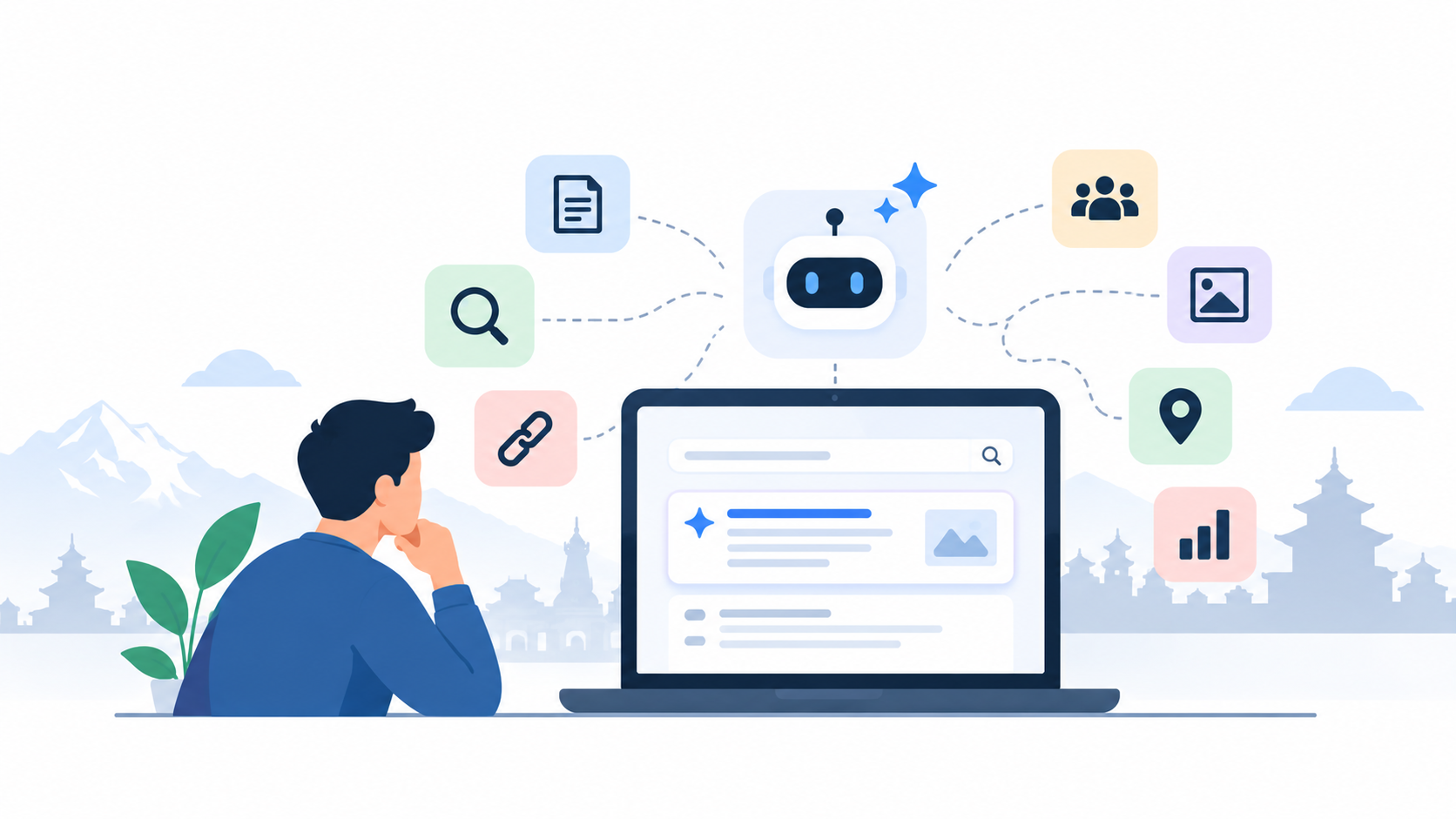
Here is a simple plan to optimize for AI search. You can start with any step.
1. Structure Content So AI Can Read It
To structure content well, use one H1, then clear H2 and H3 headings. Put one idea in each section. Use short paragraphs, lists, and tables. This makes your content easier for AI to scan and quote.
2. Write Direct Answers
Under each question heading, give a short answer in one or two sentences. Then add details. This “answer first” style helps AI pull a clean snippet. It also helps real readers.
3. Show Real Experience and Trust
AI and search engines want trusted sources. Add the author name, a short bio, and real examples. Link to your sources. Google explains its view in its guide on helpful, people-first content.
4. Add Structured Data
Schema is code that tells machines what a page is about. Structured data can mark up FAQs, products, reviews, and business details. It makes your page easier for AI to understand.
5. Fix Technical SEO and Crawl Access
AI crawlers and search crawlers must reach your pages. Check your robots.txt, sitemap, page speed, and mobile use. If a crawler is blocked by mistake, your page cannot be cited. A strong technical SEO base makes everything else easier.
6. Build Your Brand and Entity Signals
AI learns about brands from many places. Keep your name, address, and details the same everywhere. Get listed in good directories. Earn mentions on trusted sites. Our guide on off-page SEO in Nepal shows how.
7. Keep Content Fresh and Accurate
Old pages with wrong facts lose trust. Review key pages often. Update dates, prices, and steps. Add new questions people ask now.
8. Cover Questions in Full
People ask long, real questions. Cover the main question, then the follow-ups. A good content marketing plan builds topic groups with guides, FAQs, and case studies, so AI finds a full answer on your site.
9. Track AI Visibility
Check if your brand appears in AI answers for your key questions. Test the same questions each month. Note which pages are cited by AI. Use Google Search Console for search data, and compare it with what you see in AI tools.
How to Use AI and Leverage AI in SEO Work
AI is not only a thing to optimize for. You can also use AI to help with your SEO. AI for SEO can save time on daily tasks:
- Finding keyword ideas and question lists.
- Making first outlines for articles.
- Checking titles and meta descriptions.
- Spotting patterns in large sets of data. AI for data work can sort and group thousands of search terms fast.
But be careful with AI content. Do not publish raw AI text. Add your own facts, examples, and edits. AI content with no real value can hurt trust.
AI SEO Tools Worth Trying
There are many AI SEO tools. Some check content, some track AI visibility, and some help with keywords. Start with free tools and add paid ones when you need more.
Good places to start:
- Google Search Console to see search results data and fix indexing problems.
- Schema and speed checkers to test your code and page speed.
- Chat tools to test how AI answers your key questions.
See our list of SEO tools in Nepal for more ideas.
Effective AI SEO: Mistakes to Avoid

Many teams rush into AI SEO and make easy mistakes. For effective AI SEO, avoid these:
- Publishing mass AI content with no edits.
- Hiding answers deep inside long, messy pages.
- Blocking crawlers by accident.
- Forgetting traditional SEO basics.
- Using fake reviews or fake author names.
- Chasing every new trick instead of building a strong base.
These SEO mistakes waste time and can harm your site.
How to Measure SEO Performance and AI Visibility
Good SEO performance still starts with simple numbers: clicks, impressions, rankings, and leads. Now add a few AI checks:
- Does your brand show in AI answers for your top questions?
- Which pages are cited by AI, and for what topics?
- Does traffic from AI tools grow over time?
- Do these visits turn into calls, forms, or sales?
AI search results change fast, so track often and compare month by month.
Do You Need SEO Experts for AI SEO Optimization?
You can start with the basics yourself. But AI SEO optimization touches many parts: content, code, links, and tracking. SEO experts can plan the work, fix technical problems, and track results in both search engines and AI tools.
If you want help, look at our SEO and growth services. For the bigger picture of why SEO pays off, read our guide on SEO for business growth.
Frequently Asked Questions About AI SEO Optimization
What is AI SEO optimization?
AI SEO optimization is the work of making your content easy for AI systems and search engines to find, understand, trust, and cite.
Is traditional SEO still important?
Yes. Good traditional SEO is the base for AI visibility. Pages must be crawlable, indexed, and helpful.
How do I get cited by AI?
Give clear answers, show real expertise, use structured data, keep pages fast and fresh, and build mentions on trusted sites. No one can promise a citation, but these steps raise your chances.
Do I need a new website to optimize for AI search?
No. Most sites can improve by fixing structure, adding direct answers, and cleaning up technical problems.
Can I use AI to write my content?
You can use AI to help, but you should edit the text and add real facts and experience. Raw AI content is rarely enough.
How long does AI SEO optimization take to work?
Small fixes may help in weeks. Bigger gains usually take a few months, as search engines and AI tools learn your site.
How much does SEO cost?
It depends on the size of your site and the work needed. You can see typical plans on our SEO package pricing page.
Final Thoughts: AI SEO Optimization Is the Next Step, Not a Replacement
AI SEO optimization does not replace SEO. It builds on it. Keep your technical base strong, write clear and helpful answers, show real expertise, and track where your brand appears in AI answers.
Start small. Pick two or three steps from this guide, do them well, and measure the results. As AI-driven search grows, the sites with a clear structure and a trusted voice will be easier for AI to use and cite.
Want Help With AI SEO Optimization?
Flowrage helps businesses in Nepal get found in search engines and AI search. Our team checks your site, finds what is holding it back, and builds a simple plan for AI SEO optimization and strong traditional SEO.