A Practical Search Plan for Nepali Companies Selling to Other Businesses
Talk to Flowrage about B2B SEO in Nepal.
When one business needs a service, it often starts with a Google search. A company may look for a software team, an accounting firm, an industrial supplier, a consultant, or a digital marketing partner. If your website does not appear with a clear answer, a potential customer may contact another provider.
B2B SEO in Nepal helps your business become easier to find when other businesses search for the products or services you offer. The aim is not to bring every visitor to your website. It is to attract people who have a real business need and help them take the next step.
This guide explains how Nepali B2B companies can plan their SEO, choose useful keywords, build service pages, and measure leads. Businesses that want expert support can also explore our SEO services in Nepal. You can use the steps whether you serve customers in Kathmandu, across Nepal,l or in other markets.
What is B2B SEO?
B2B SEO is the work of improving a business website so that people from other companies can find it through search engines. B2B means business-to-business. Your customer is another business, not an individual shopper.
For example, a hotel may search for a website development company. A construction firm may need a supplier. A growing company may look for payroll software or an IT support team. Each search shows a need, and your website should make it clear how you can help.
B2B buying decisions often take more time than simple online purchases. A manager may compare providers, speak with a team, check past work,rk and ask for a proposal. Your website needs to answer those questions before the first call.
Why SEO matters for B2B companies in Nepal
People who search for a service are already looking for an answer. Helpful pages can put your business in front of them at that moment. SEO can also support your sales team by giving prospects useful information to read before they contact you.
- Reach people with a clear need: Show up for searches related to the services you provide.
- Build trust before a meeting: Explain your process, experience, team,eam and work in a clear way.
- Support longer buying decisions: Answer common questions about price, timing, delivery, and results.
- Bring visits over time: Useful pages can continue to attract search traffic after they are published.
- Help sales conversations: Share relevant service pages, guides and case studies with potential clients.
SEO is not an instant source of leads. Results depend on your website, competition, content, market, and the work you put in. Treat it as a steady channel that supports your wider sales plan.
Start with the services you want to sell
Before choosing keywords, decide which services matter most to your business. Do not try to rank one page for every service you offer. Give each important service its own clear page when there is enough useful information to explain it.
For example, a technology company may offer website development, custom software,e and ongoing IT support. These are different needs. A visitor looking for a new website should not have to search through a page that mainly talks about software maintenance.
For each service, write down:
- Who needs this service?
- What problem are they trying to solve?
- What result or deliverable can you provide?
- What questions do they ask before choosing a provider?
- What proof can you show, such as examples, reviews, or case studies?
This simple exercise gives your SEO plan a business goal. It also helps your pages speak to the right people.
Choose B2B keywords based on buying intent.
A keyword is the phrase someone types into a search engine. The best keyword is not always the one with the biggest search volume. For a B2B company, a smaller number of searches from people who need your service may be more valuable than many general visits.
Build your keyword list around the way a potential client searches. Useful keyword groups include:
- Service searches: “custom software development company in Nepal” or “SEO services in Nepal”.
- Location searches: “IT company in Kathmandu” or “web development company in Lalitpur”.
- Problem searches: “how to improve website leads” or “how to automate business tasks”.
- Comparison searches: “in-house marketing vs SEO agency” or “custom software vs ready-made software”.
- Cost searches: “website development cost in Nepal” or “SEO pricing in Nepal”.
Check whether each phrase matches a service you really provide. Do not create pages for keywords that are unrelated to your offer. You can use Google Search Console to see the searches that already bring people to your website. Our guide to keyword research explains how to build a useful list.
Create service pages that answer real buyer questions
A strong service page should help a visitor understand what you do and decide whether to contact you. It should not be a short paragraph filled with keywords.
Include these parts where they fit:
- A clear opening: State who the service helps and what problem it solves.
- What is included: Explain the work, deliverables,s and limits in plain language.
- Your process: Show the main steps, from the first discussion to delivery and support.
- Proof: Add real projects, results, testimonials,l s or examples you have permission to share.
- Common questions: Answer questions about timing, price, support, and what the client needs to provide.
- A next step: Give visitors a clear way to ask a question, book a call,l or request a proposal.
Make each page useful on its own. Avoid copying the same service description across many pages and changing only the location or service name. That gives buyers little reason to read further.
Use case studies to show how you work
B2B buyers often want to know whether you have solved a problem like theirs. A case study can help answer that question. It does not need to make big claims. It needs to explain the work honestly.
A useful case study can cover:
- The client’s business type and starting problem, if you have permission to share it.
- The goal agreed before work began.
- The steps your team took and why.
- The outcome, supported by real numbers or clear observations where available.
- What you learned and what another business can take from the project.
Do not invent results or publish client details without permission. If you cannot share a client’s name, describe the project in a way that protects their identity while still explaining the work.
Publish helpful content for each stage of the buying journey
Not every visitor is ready to contact you today. Some are learning about a problem. Others are comparing options or checking costs. Your content should help at each stage.
- Learning: Explain common problems, terms,rms and possible solutions.
- Comparing: Help readers compare approaches, tools, or types of providers fairly
- Choosing: Explain your services, process, pricing factors, and relevant experience.
For example, a company considering a new website may first read about website planning, then compare development options, and finally review your service page. Link related articles to the right service page so readers can move naturally from learning to taking action.
For more ideas, read our guide to building an SEO content strategy and our article on SEO pricing in Nepal.
Make your website easy to use and easy to understand
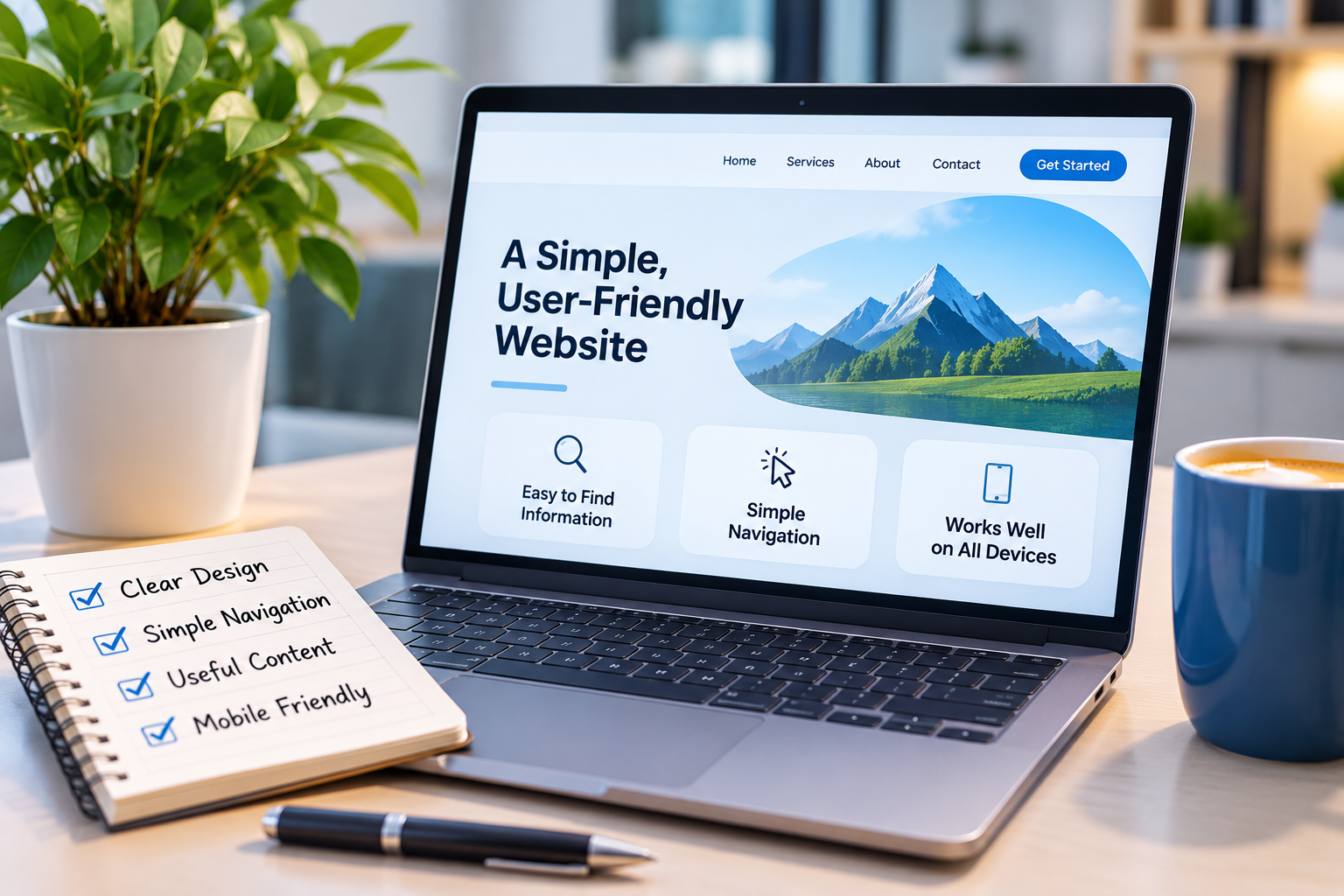
Good content will not help much if visitors cannot use your website. Check that important pages load properly on phones, menus are clear, and contact forms work. Make sure search engines can reach the pages you want them to find.
Start with these checks:
- Use a clear page title and one main H1 heading for each page.
- Write descriptive headings that help readers scan the page.
- Link to related services and useful articles using meaningful link text.
- Compress large images and add useful alt text to meaningful images.
- Check for broken links, redirect problems,s and pages blocked from indexing.
- Keep your business name and contact details clear and consistent.
Our website SEO audit guide covers checks you can use to find problems. Google’s SEO Starter Guide is also a useful reference for website owners.
Measure enquiries, not only rankings
Rankings and traffic can show whether more people are finding your website. But B2B SEO should also help your business start useful sales conversations. Track what happens after a visitor arrives.
| What to measure | What it tells you |
|---|---|
| Search impressions | How often your pages appear in Google results |
| Clicks and click-through rate | Whether people choose your result when they see it |
| Organic landing-page visits | Which pages bring visitors from search |
| Enquiry form submissions | How many visitors contact your business |
| Qualified leads | How many enquiries match your target customer |
| Sales conversations and wins | Whether search leads contribute to business results |
Set up conversion tracking for forms, calls or other important actions where possible. Review the data each month. If a page gets visits but no enquiries, check whether it matches the search intent, explains the offer and makes the next step clear.
A simple 90-day B2B SEO plan
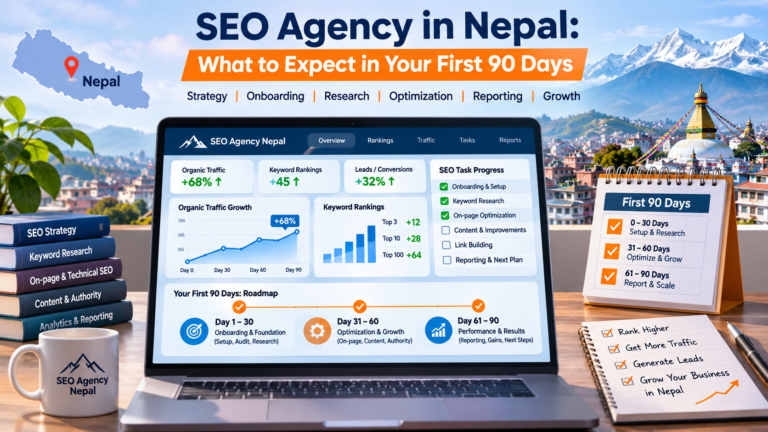
Days 1–30: Set the direction
Choose the services and customer groups that matter most. Review your website, fix important technical problems, check Search Console and map your main keywords to the right pages. Record your starting clicks, impressions, and enquiries.
Days 31–60: Improve important pages
Update your main service pages with clear explanations, proof,f and useful calls to action. Add internal links from related articles. Publish one or two helpful pieces based on real customer questions. Test your forms and phone links.
Days 61–90: Review and improve
Check which pages are gaining impressions and clicks. Look at the search terms behind those visits. Review enquiries with your sales team and note which topics bring the best-fit prospects. Improve pages that attract the wrong audience or do not help visitors take the next step.
This is a working plan, not a promise of a ranking or lead count. SEO progress can take longer, especially for new websites or competitive services. Keep measuring and adjust the plan based on evidence.
When should a B2B company work with an SEO agency?
You may be able to handle basic SEO in-house if you have the time and skills. An SEO agency can be useful when you need help with technical checks, keyword planning, content, website improvements, t or regular performance reviews.
Before choosing a partner, ask what work will be done, which pages will be improved, how results will be measured, and who will make the changes. Be careful with guaranteed ranking promises. No agency controls Google’s search results.
If you are comparing providers, read our guide to choosing an SEO company in Nepal. If you want support with search visibility, explore Flowrage’s SEO and growth services.
Frequently asked questions about B2B SEO in Nepal
How long does B2B SEO take to show results?
There is no fixed timeline. Some technical or page changes may be noticed sooner, while stronger search visibility can take months. Your starting point, competition, website quality,lity and consistency all matter.
Is SEO useful for a B2B company with only a few customers?
Yes. You do not need thousands of visitors. A focused website that reaches a small group of relevant decision-makers can be more useful than broad traffic that never becomes an enquiry.
Should every service have its own page?
Give each important service a separate page when it solves a distinct customer need, and you can explain it with useful detail. Do not create thin pages just to target small keyword variations.
Can a small Nepali company compete with larger businesses?
It can compete for relevant searches by focusing on a clear service, a specific customer group, useful expertise,ertise and strong proof. Start with the areas where your team can deliver the most value instead of trying to cover every topic.
What is the most important B2B SEO metric?
There is no single metric for every business. Track search visibility, qualified enquiries,quiries and the sales outcomes that matter to your company. Rankings alone do not show whether SEO is bringing the right customers.
Build a search strategy around the customers you want
B2B SEO works best when it connects what people search for with the problems your business can solve. Start with your most valuable services, create pages that answer buyer questions, show real proof, and measure the enquiries that follow.
If your company wants to improve its search visibility in Nepal, talk to Flowrage about your SEO goals. A clear plan should begin with your customers, your services, and the results your business needs.