You have a website. You want more visitors. Someone tells you to run ads. Someone else says to do SEO. A third person says to post on Facebook every day. Who is right?
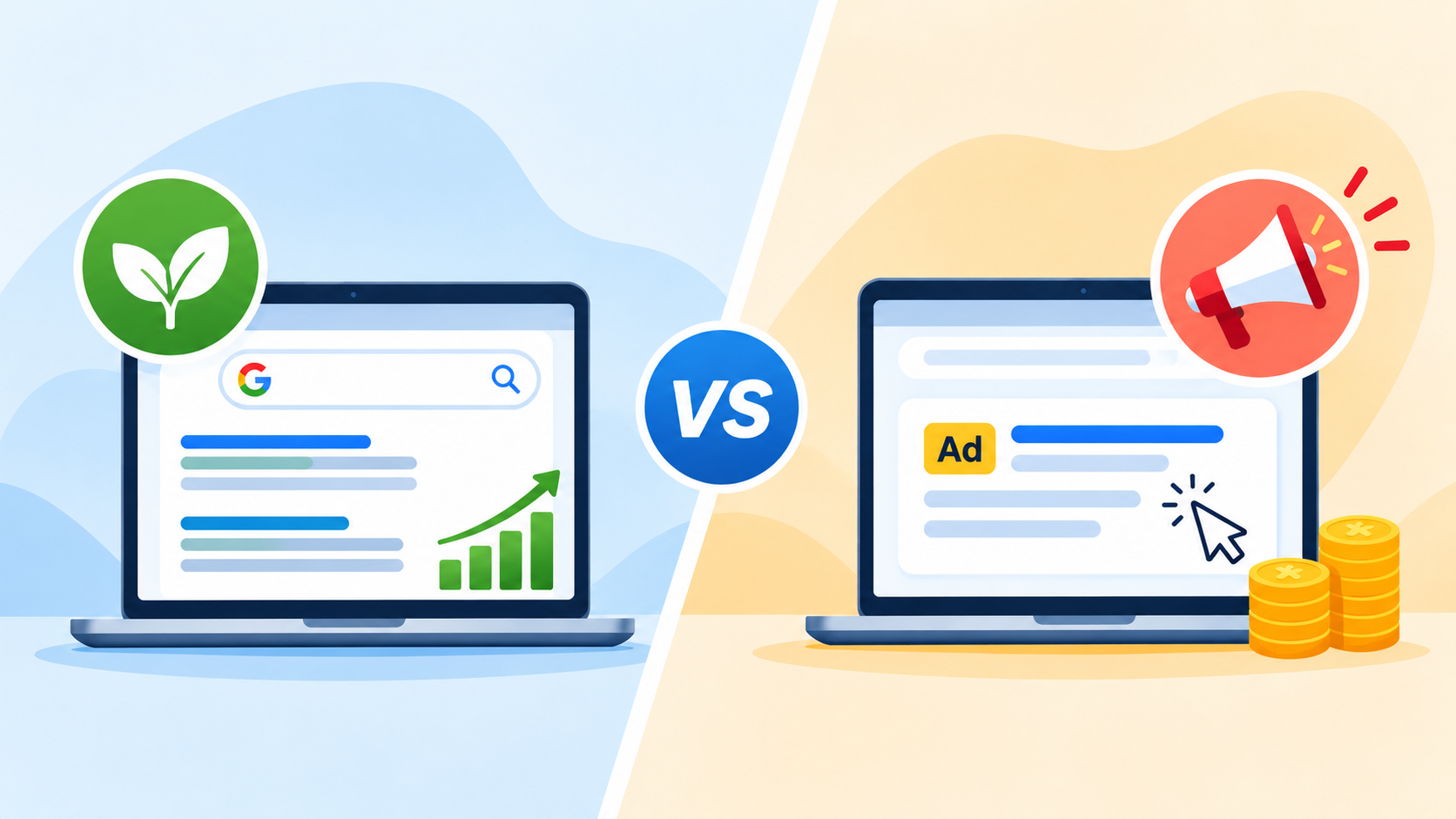
This is the old question of organic traffic vs. paid traffic. Both bring people to your site. Both can bring customers. But they work in very different ways; they cost money in different ways,s and they pay back at different speeds.
In this post on organic traffic vs paid traffic, you will learn what each one is, how they compare, re and when to use each. You will also see how to mix them, how to measure results,lts and what to watch out for. We keep the words simple, and we answer the questions people ask most.
What Is Organic Traffic?
Organic traffic is the visitors who find your site through unpaid results. Most often, this means people who click your page in Google search results after typing a question or a need.
You do not pay Google when someone clicks. You earn the click by having a page that Google thinks is useful. That work is called SEO, or search engine optimization.
Organic traffic can also come from other free sources, such as links on other sites, social posts that people share, or your Google Business Profile on Maps. But when people talk about organic traffic vs paid traffic, they usually mean organic search traffic. Knowing this is the first step in the choice.
What Is Paid Traffic?
Paid traffic is the visitors who come to your site because you paid for an ad. You pay the platform, and it shows your message to people.
Common kinds of paid traffic include:
- Search ads. Your ad shows at the top of Google results for a search. Most are pay-per-click, so you pay when someone clicks.
- Social ads. Ads on Facebook, Instagram, TikTok,ikTok or LinkedIn. You choose who sees them by age, place, and interests.
- Display and video ads. Banners on websites and videos on YouTube.
- Boosted posts. A normal social post that you pay to show to more people.
When you stop paying, the traffic stops too. That is the core of organic traffic vs paid traffic: one you earn, and one you buy.
Organic Traffic vs Paid Traffic: A Side-by-Side Look
Here is a quick comparison.
| Organic traffic | Paid traffic | |
|---|---|---|
| How you get it | SEO, content, links, local listings | Ads on search and social platforms |
| Cost to get a click | No cost per click, but you invest in work | You pay per click or per view |
| Speed | Slow, often three to six months or more | Fast, often within days |
| How long it lasts | Keeps working over time | Stops when you stop paying |
| Control | You cannot control exactly when or where you show | You control budget, timing, and audience |
| Trust | Many people trust organic results more | Some people skip ads |
| Targeting | By search intent | By search intent, interests, place, and more |
| Best for | Long-term growth | Quick tests, launches, and offers |
| Risk | Rankings can change | Costs can rise, and clicks may not convert |
Neither side wins every row of the organic traffic vs paid traffic table. That is why the smart question is not “which is better” but “which fits my goal right now”.
Organic Traffic vs Paid Traffic: The Case for Organic
Organic traffic has some strong points.
- It builds over time. A good page can bring visitors for months or years.
- It costs less per visit in the long run. Once a page ranks, each extra visit costs you nothing extra.
- It builds trust. Ranking on page one, with good reviews, tells people you are real.
- It reaches ready people. Someone who searches for what you sell often has a clear need.
- It supports everything else. Good content and a fast, clear site help your ads, your emails, and your social posts too.
The Weak Points of Organic Traffic
- It takes time. Most sites need months to see clear results.
- Results are not certain. Nobody can promise a rank, and no ethical SEO expert can guarantee specific rankings.
- Rankings can move when Google changes its systems or rivals improve.
- You need steady work, like new content, links,s and updates.
Organic Traffic vs Paid Traffic: The Case for Paid
Paid traffic also has strong points.
- It is fast. You can launch an ad and get visitors the same week.
- You control it. You pick your budget, your audience, your message,ge and your time.
- It is easy to test. You can try different offers, titles,les and pages and see what works.
- It works for launches and sales. If you have a new product or a festival offer, ads put it in front of people right away.
- It is easy to measure. You can see cost per click, leads, and cost per lead.
The Weak Points of Paid Traffic
- It stops when the money stops.
- Costs can rise when more rivals bid on the same words.
- Some people ignore or distrust ads.
- Clicks do not always turn into customers. If your site is weak, you pay for visitors who leave.
- It needs ongoing care. Poor ad settings can waste a lot of money.
Cost: Organic Traffic vs Paid Traffic
Money is where many owners get confused about organic traffic vs. paid traffic, so let us be clear.
Paid traffic has a direct cost. Every click or view has a price. A small budget can buy a small number of visitors, and more budget buys more. The cost is easy to see, and it can grow fast.
Organic traffic has an indirect cost. You do not pay per click, but you do pay for the work behind it: writing content, fixing your site, building links,s and managing your listings. That work costs time or money up front, and the benefit comes later.
Think of it like renting and buying a shop. Ads are like paying rent. You can move in tomorrow, but you pay each month, and when you stop, you leave. SEO is like buying. It costs more at the start and takes longer, but you build something you keep.
Speed: Organic Traffic vs Paid Traffic
Paid traffic wins on speed. Once your ads are approved, visitors can arrive in hours or days.
Organic traffic is slower. A new page often needs weeks to be found and months to build trust. Hard keywords take longer. Be careful of anyone who promises first-page results by a set date.
If you need leads this month, ads can help. If you want a steady flow of leads next year, start SEO now. Because organic traffic takes time, the best time to begin is before you need it.
Trust and Clicks in Organic Traffic vs Paid Traffic
Searchers know the difference between ads and normal results. Many people scroll past ads and click the normal results. Others click ads when the offer fits what they need. It depends on the search, the person, and the industry.
What is true is that a strong organic listing, with good reviews, a clear title,e and a trusted brand, can build confidence in a way that a short ad often cannot. A good ad, on the other hand, can win a click from someone who has never heard of you.
Targeting and Intent in Organic Traffic vs Paid Traffic
Both can target people who are looking for what you sell. But they do it differently.
- Organic search and search ads both reach people at the moment they search. This is called high intent.
- Social ads reach people who were not looking. They show up in a feed, and you interrupt them with an offer. This can work well for new products and brand awareness, but the buying intent is often lower.
For many local businesses, search traffic, both organic and paid, tends to bring the most ready-to-buy visitors.
Organic Traffic vs Paid Traffic for Local Businesses in Nepal
Here is how this plays out for businesses in Nepal.
- Many businesses use Facebook and Instagram boosts. These are paid traffic, but they work differently from search ads. They show your message to people who were not searching.
- Google Maps matters a lot. For local searches like “dentist in Lalitpur”, the map results can bring many calls. A strong Google Business Profile is organic traffic with no cost per click. Our local SEO services focus on this.
- Budgets are often small. Ads can use up a small budget fast. SEO spreads the cost out and builds something that lasts.
- Mobile and messaging rule. Most visitors use phones. Many leads come through calls, WhatsApp, PP, and Viber, so make those easy.
- Search volume can be low. Tools often show small numbers for Nepal. A few good searches can still bring valuable customers.
A small clinic, shop, or contractor often does best by building organic traffic through a good website and a strong Business Profile, then adding paid traffic for special offers or slow seasons.
Organic Traffic vs Paid Traffic: When to Choose Paid
Paid traffic is a good fit when:
- You are launching a new business, product, or service and need visitors now.
- You have a time-limited offer, like a festival sale.
- You want to test an idea, a price, or a message before you invest more.
- Your site is new and cannot rank yet.
- You need to reach a very specific group of people.
- Your profit per sale is high enough to pay for the clicks.
Organic Traffic vs Paid Traffic: When to Choose Organic
Organic traffic is a good fit when:
- You want steady, lasting growth.
- You want to lower your cost per lead over time.
- You sell something people actively search for.
- You want to build trust and authority in your field.
- Your budget for ads is small.
- You can afford to wait a few months for results.
How to Use Organic Traffic and Paid Traffic Together
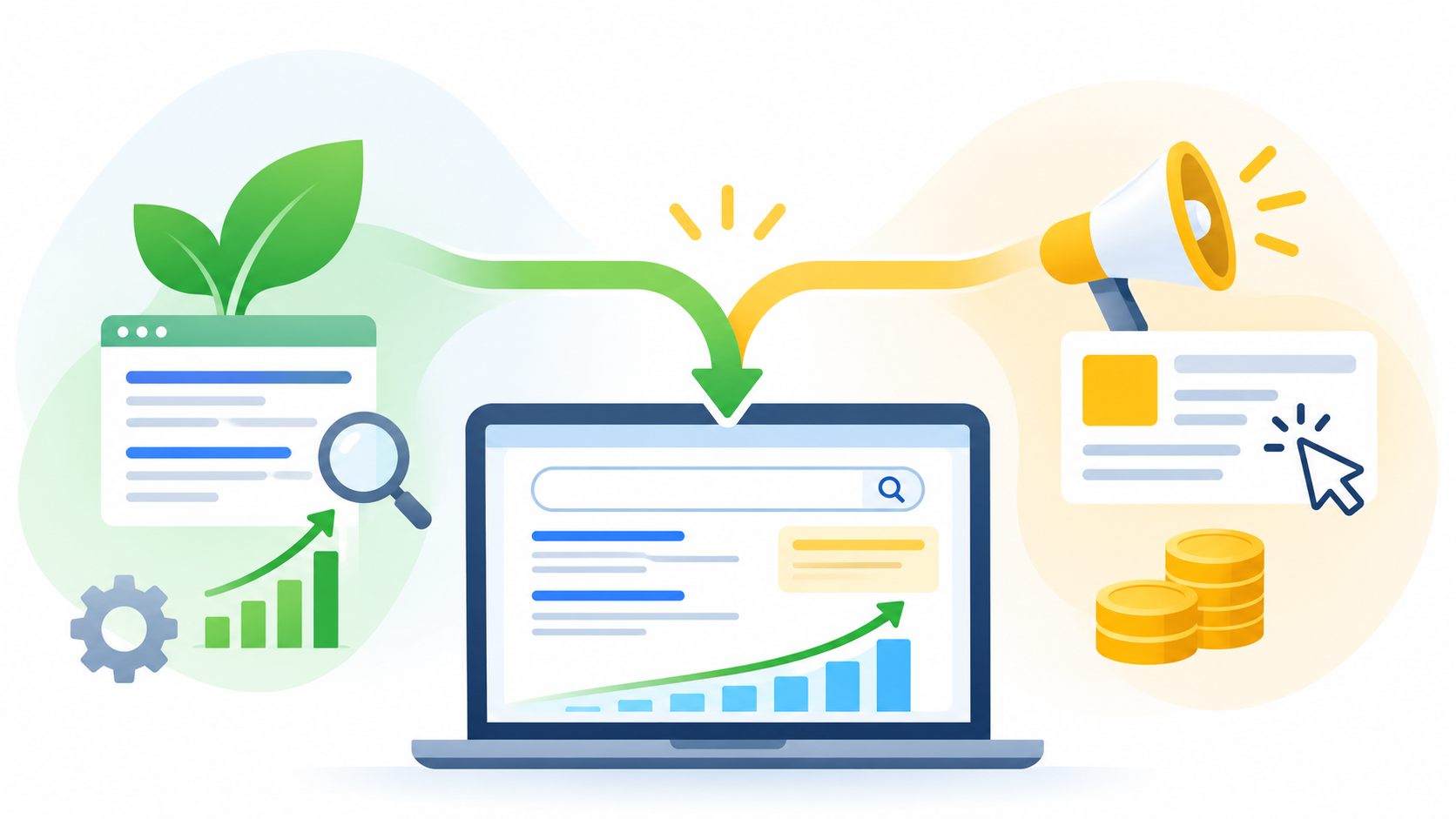
The best answer to organic traffic vs. paid traffic is often to use both. They help each other.
- Use ads to learn fast. Run a small ad test to see which keywords and messages bring leads. Then write organic content around the winners.
- Use SEO to cut ad costs over time. As more visitors come from organic search, you may need to rely less on ads.
- Use ads to fill the gap. While your SEO grows, ads can bring leads in the first months.
- Improve your landing pages. A fast, clear page helps both SEO and ad results. In Google Ads, the quality of your landing page also affects your Quality Score.
- Retarget visitors. Show ads to people who already visited your site from organicsearch, to bring them back.
- Cover both on important searches. For key searches, showing up in both the ad and the normal results can win more attention.
One point to remember: paying for ads does not make your organic rankings go up, and ranking well does not lower your ad prices. They work through different systems. They help each other by sharing what you learn and what you build.
A Simple Way to Split Organic Traffic vs Paid Traffic
Every business is different, but these rough guides can help.
| Your situation | A sensible approach |
|---|---|
| Brand new business, small budget | Start with your Google Business Profile and a simple, fast site. Add small, focused ads to get first leads. |
| Established local business | Invest steadily in local SEO and content. Use ads for special offers and slow seasons. |
| Online store | Build category and product pages for SEO. Use ads for sales, new pr,oducts and retargeting. |
| Business with a big seasonal peak | Use ads close to the peak. Build SEO all year so you rank when the season arrives. |
| Business with a long sales cycle | Lean on SEO and helpful content to stay visible. Use ads to follow up with people who have shown interest. |
As your organic traffic grows, you can review how much you spend on ads.
How to Measure Organic Traffic vs Paid Traffic
Track both in the same place so you can compare organic traffic vs paid traffic fairly.
- Google Analytics. It splits your visitors by source, such as organic search, paid search, and paid social. Look at visits, leads,s and sales from each.
- Google Search Console. It shows organic clicks, impressions, queries, es and pages. Open it to see how your SEO is doing.
- Your ad platform. It shows spend, clicks, cost per click, and conversions for paid traffic.
- Your lead records. Track calls, forms,s and messages, and ask new customers how they found you.
The most useful numbers are:
- Cost per lead. Total spend divided by leads.
- Conversion rate. The share of visitors who become leads.
- Customer value. How much a customer is worth to you over time.
- Return on investment. What you earn compared with what you spend.
Do not judge by traffic alone. A hundred visitors who never call are worth less than ten who do.
You can use Google Search Console for organic results and Google Ads for paid search.
Common Mistakes in Organic Traffic vs Paid Traffic
- Choosing only one and ignoring the other without a clear reason.
- Expecting SEO to work in two weeks.
- Spending on ads when the website is slow, confusing, ng or not mobile-friendly.
- Not tracking calls, forms, and messages, so you cannot tell what works.
- Stopping ads without a plan and then wondering why leads dry up.
- Giving up on SEO after one or two months.
- Buying cheap traffic that does not convert.
- Judging results by clicks instead of customers.
- Bidding on very broad keywords with a small budget.
- Treating social ads and search ads as the same thing.
Should You Manage Organic Traffic vs Paid Traffic Yourself?
You can start on your own. Setting up your Business Profile, writing helpful pages,s and running a small ad test are all doable.
You may want help if your site is slow, if your ads waste money, if you do not know where leads come from, or if you have no time. At Flowrage, we focus on SEO and websites that bring lasting organic traffic. We make sure your site is fast, clear,r and ready, whether your visitors come from search, social, al or ads. See our SEO services, on-page SEO, technical SEO, a nd content marketing, or look at our SEO packages.
Frequently Asked Questions About Organic Traffic vs Paid Traffic
What is the difference between organic traffic and paid traffic?
Organic traffic comes from unpaid results, mostly through SEO. Paid traffic comes from ads that you pay for. Organic builds slowly and lasts. Paid is fast and stops when you stop paying.
Which is better:n organic traffic vs. paid traffic?
Neither is better in every case. Paid traffic is better for fast results, tests,s and offers. Organic traffic is better for long-term growth and lower cost over time. Most businesses do best with a mix.
Is organic traffic free?
You do not pay per click, but it is not free to build. You spend time or money on content, site fixes, links, and listings. The payoff is that visits keep coming without a price on each click.
How long does it take to get organic traffic?
Most sites see small changes in a few weeks and clear gains in three to six months. Hard keywords and new sites take longer.
How fast can paid traffic work?
Often within days. After your ads are approved, visitors can start arriving the same week.
Does paid traffic help my SEO?
Not directly. Ads do not raise your organic rankings. But ads can show you which keywords and messages bring leads, and that helps you plan your SEO.
Can I stop paid ads and keep my traffic?
No. Paid traffic stops when your ads stop. That is why many businesses build organic traffic in parallel.
In organic traffic vs paid traffic, which should a small business start with?
It depends on your needs. If you need leads now, a small, focused ad test can help. If you have time and a small budget, start with your Business Profile, a good website, te and local SEO. Many small businesses do both in small steps.
In organic traffic. vs. paid traffic, which brings more customers to local businesses?
Often,ften search traffic does, both organic and paid, especially map results and local searches. Social ads can help with awareness and offers, but buying intent is often lower.
How do I track organic traffic vs paid traffic?
Use Google Analytics to see your visitors by source, Google Search Console for organic results, and your ad platform for paid results. Also track calls, forms,s and messages, and ask customers how they found you.
Start Organic Traffic vs Paid Traffic With One Clear Goal
Pick one goal for the next three months. Do you need leads this month, or steady growth by next year? If you need leads fast, start with a small paid test. If you want lasting growth, start building organic traffic now. If you want both, do both in small, measured steps.
If you would like an expert to look at your site and your goals, book a free consultation with Flowrage. We will check your site, explain what will help most, and show you where to start.